
I Built Brutal BJJ Strength With This #1 Method! [Max Effort Method Explained]
Dec 15, 2025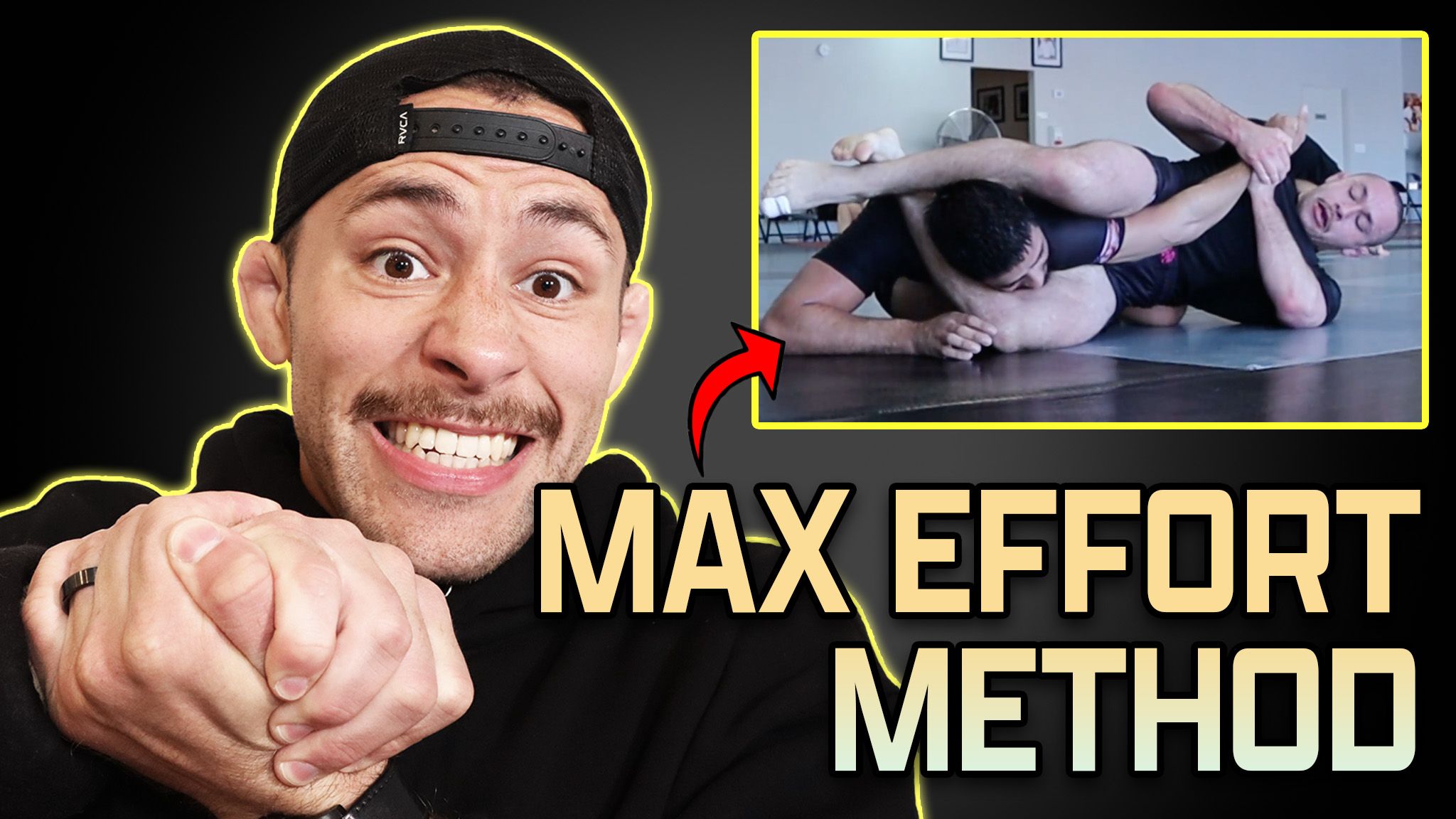
How I Use The Max Effort Method For Brutal BJJ Strength
*For a full & more in-depth breakdown, watch this video on YouTube*
What's good, fellas! Coach J, here! 👋
If you’re looking to take your strength and athleticism on the mat to the next level, you’re in the right place.
In this article, you will learn...
➤ What the Max Effort Method is (and what it's not)
➤ The 9 Benefits of Using The Max Effort Method
➤ How To Design Your Own Max Effort Workout
➤ Common Mistakes To Avoid When Using The Max Effort Method
What is the Max Effort Method?
Before we can get into the nitty-gritty, we need to define strength.
In the context of this article, strength = "Your ability to produce force."
The stronger you are, the more force you can apply to your techniques, from takedowns to submissions. The Max Effort Method focuses on lifting heavy weights (generally above 90% of your max) to improve your strength and force production.
How does it do this?
The "Force Equation" is...
F = Mass x Acceleration
Lifting a 200lb barbell requires you to produce more force than lifting a 100lb barbell. This is because the 200lb barbell has more mass.
If two athletes each lift a 100lb barbell, and Athlete A lifts it slow... And Athlete B lifts it fast... Athlete B has produced more force even though they both lifted the same "mass".
The Max Effort Method leans on the side of helping you develop the "mass" side of the force equation.
9 Benefits of the Max Effort Method
- Develops Top-End Strength: Lifting weights above 90% recruits powerful muscle fibers, enhancing all athletic qualities.
- Improves Neurological Efficiency: This method boosts your ability to recruit larger muscle fibers quickly, crucial for intense grappling exchanges.
- Teaches You How to Strain: Lifting heavy loads builds mental toughness, helping you think clearly under pressure.
- Enhances Rate of Force Development: This is your ability to produce force quickly—a key quality in combat sports.
- Increases Structural Integrity: Strengthening muscles also fortifies ligaments and tendons, reducing injury risk.
- Improves Muscular Coordination: This method enhances both intra- and inter-muscular coordination, making your movements more efficient.
- Increases Bone Density: Lifting heavy stimulates bone growth, preparing your body for the stresses of grappling.
- Stimulates Myofibrillar Hypertrophy: This type of hypertrophy increases muscle strength without excessive size, ideal for grapplers.
- Boosts Confidence: Successfully lifting heavy weights enhances your mental game, translating to better performance on the mat.
Implementing the Max Effort Method
Ready to lift heavy? Here’s how to integrate the Max Effort Method into your training:
1. Structure Your Sessions
Dedicate one session for upper body and one for lower body max effort training each week. Space them out by at least 48-72 hours for optimal recovery.
2. Choose Your Exercises
Select one compound exercise for both upper and lower body. Compound lifts like squats, deadlifts, and presses are your best friends here. Focus on exercises that align with your individual weaknesses and training goals.
3. Work Up to a 1-5 Rep Max
Warm up properly, then gradually increase the weight until you hit your max for that day. Aim for 90% or more of your max, but remember: it’s about maintaining form.
4. Incorporate Secondary Movements
Follow your main lift with a secondary exercise that either varies the main movement or addresses weaknesses. This adds volume without compromising recovery.
5. Accessory Work
Finish your workout with 2-4 accessory exercises to target muscles used in your primary lifts. Think hamstring curls, Copenhagen planks, or lunges.
Common Mistakes to Avoid
Even the best methods can go awry if not executed properly. Here are some common pitfalls:
- Going Past Technical Failure: Stop when your form breaks down. Pushing beyond this point can increase your risk of injury.
- Choosing Inappropriate Exercises: Stick with stable, compound movements. Avoid overly complex or unstable lifts that hinder force production.
- Not Auto-Regulating: Adjust your workout intensity based on how you feel that day. If you're under-recovered, dial it back.
- Constantly Missing Lifts: You shouldn’t miss lifts consistently. Focus on hitting your max for that day without risking injury.
- Neglecting Recovery: Recovery is just as important as the workout itself. Prioritize nutrition, sleep, and proper training structure.
Sample Max Effort Workout Template
Here’s a quick example of what a max effort workout might look like:
- Warm-Up: Full body warm-up and mobility work.
- Main Lift: Zercher Box Squat – Work up to a 5 rep max.
- Secondary Movement: Zercher Pause Squat – 3 sets of 5 reps.
- Accessory Work:
- Banded Leg Curls
- Dumbbell Side Bends
- Reverse Hypers
- Copenhagen Planks
And there you have it! The Max Effort Method can be a game-changer for grapplers looking to enhance their strength and performance. Remember, it’s about lifting heavy, maintaining proper form, and recovering adequately.
If you have any questions or want to share your experiences, drop a comment below. Lift heavy, roll hard, and I'll catch y'all later! PEACE!
